
Melhores Corretoras de Forex para Investir com Segurança
🌍 Conheça as melhores corretoras de Forex do mundo! Avaliamos segurança, tipos de conta, custos e ferramentas para sua escolha com confiança. 💹
Por
Aline Souza
Editado por
Aline Souza
Forex trading, or foreign exchange trading, lets traders buy and sell currencies on a global scale. It’s the largest financial market by daily volume, clocking in at over $6 trillion. That means there’s plenty of opportunities for those ready to dive in.
One major perk is accessibility. Unlike stock markets that often close during the weekends or holidays, the forex market runs 24 hours a day, five days a week. This lets traders from New York to Tokyo take positions whenever suits their schedules, without being tied down to regular business hours.
Liquidity is another key advantage. Because forex deals with huge volumes of currency trades worldwide, it’s easy to enter or exit positions quickly without pushing prices up or down. For example, trading pairs like EUR/USD or USD/JPY usually have tight spreads and swift order execution, which keeps costs down and speeds up profits.
Flexibility also stands out in forex trading. You can go long or short easily, giving you the chance to profit in rising or falling markets. On top of that, many brokers offer leverage, which amplifies trading volumes. But be careful—leverage raises both potential gains and risks, so managing your exposure is vital.
Technology has transformed forex trading. Advanced platforms enable real-time analysis, automated trading, and algorithmic strategies. Traders using tools from MetaTrader to cTrader can customize approaches based on technical indicators or fundamental data, making trades sharper and more informed.
Risk management is essential here. Smart traders use stop losses, position sizing, and diversification across currency pairs to limit losses. The forex market’s volatility means rewards don’t come without risks, so understanding how to protect your capital is key.
The bottom line is forex trading offers a unique blend of accessibility, liquidity, and flexibility, making it attractive for investors of all levels. But success hinges on discipline, strategy, and mastering risk.
Whether you’re a day trader looking for quick moves or a long-term investor seeking currency exposure, forex trading can fit into broader portfolios. It complements other asset types, providing diversification and new profit avenues.
Forex operates 24/5, offering continuous market access.
Massive liquidity makes entry and exit efficient.
Flexibility in market direction thanks to easy shorting and leverage.
Tech platforms enable tailored, data-driven trades.
Risk management strategies must be in place to handle volatility.
In the next sections, we’ll break down how to optimize these benefits and integrate forex trading confidently into your investing toolkit.
Accessibility and market availability are key factors that make forex trading attractive to a wide range of investors and traders. The forex market’s global reach means participants can enter and exit positions with ease, regardless of their location. This accessibility allows for a continuous flow of trades, enhancing opportunities while keeping costs relatively low.
The forex market runs 24 hours a day, five days a week, thanks to its operation across multiple time zones worldwide. This continuous schedule starts on Sunday evening in the U.S. (when the Sydney market opens) and closes on Friday evening after New York session ends. Traders in New York, London, Tokyo, and Sydney take turns as the main hubs, ensuring the market never really sleeps during the business week.
This around-the-clock setup is highly practical. For instance, a trader based in Chicago can adjust strategies late at night without waiting for the market to open in their local time. It also means traders can respond quickly to breaking news from any continent, capitalizing on market shifts as they happen rather than waiting hours or days.
Non-stop trading opportunities offer several advantages. Since the market doesn’t shut during weekdays, breaks between trading sessions are minimal, and liquidity remains relatively stable through overlapping hours—like the London-New York overlap, known for higher volume and tighter spreads.
Plus, this flexibility lets traders tailor their involvement based on their schedule. Someone with a day job can focus on the forex market in the evening, while full-time traders can take advantage of all active sessions. The ability to trade at almost any hour drastically improves access for individual traders and professionals alike.
One of forex’s biggest pulls is the minimal initial investment needed to get started. Unlike stock markets that often require purchasing entire shares or meeting margin requirements, forex brokers frequently allow trading with as little as $50 to $100. This low financial hurdle opens the door for smaller investors or those testing the waters without risking substantial capital.
Such accessibility fosters an environment where even casual traders can participate. For example, new entrants might start with a modest account funded through popular brokers like OANDA or IG, both of which accept relatively small deposits.
Demo accounts also play a critical role, offering a risk-free way to practice trading strategies and familiarize oneself with platform tools. These accounts simulate real market conditions but use virtual funds, so you won’t lose actual money while learning the ropes. Having access to demo trading significantly lowers the intimidation factor and builds trader confidence before diving into live markets.
Both minimal deposit requirements and demo accounts make forex trading accessible not just for financial professionals, but for anyone interested in exploring currency markets without a steep initial commitment.
Accessibility sets forex apart: with a global 24/5 schedule and low financial barriers, more people can actively trade and manage their portfolios on their own terms.
Liquidity in the forex market refers to how easily you can buy or sell a currency without causing a big swing in its price. Major currency pairs like EUR/USD, USD/JPY, and GBP/USD are the stars of liquidity. These pairs draw the highest trading volumes daily, thanks to their global importance and the number of participants involved—from central banks to retail traders.
Because these major pairs trade so actively, they tend to offer smoother price action, meaning the prices don't jump wildly with each trade. For instance, the EUR/USD pair usually sees billions of dollars exchanged every day, creating a vast pool of buyers and sellers. This abundance keeps the market fluid, allowing traders to enter or exit positions quickly.
Liquidity also shapes price stability and spreads. In a highly liquid market, price swings tend to be less extreme because a single trade won't push prices too far. This helps maintain fair market value and reduces surprises for traders. The spreads—the difference between a currency's buy and sell price—are tighter too, sometimes just a fraction of a pip for major pairs. That means traders face lower transaction costs, which can add up over many trades.
One big advantage of liquidity is how it makes getting in and out of trades straightforward. When the market is thick with buyers and sellers, orders execute almost instantly. Picture trying to sell a house in a neighborhood where nobody's looking—things take longer and you might have to drop the price. Forex liquidity ensures that doesn't happen, especially with major pairs, helping you seize opportunities or cut losses without delays.
Tight spreads are another plus. Since the gap between buy and sell prices shrinks, you keep more of your gains rather than losing them to the cost of trading. For example, if the EUR/USD spread tightens from two pips to just one, you effectively halve the cost incurred right when you enter the trade. Over time, especially for frequent traders, these savings can be substantial.
High liquidity in forex means you can act fast and pay less to trade, which is key for both beginners and pros.
In essence, a liquid market like forex, especially on its major pairs, makes trading more efficient and cost-effective. It minimizes surprises and lets you trade with confidence, knowing your moves won’t drastically sway the market or rack up unnecessary costs.
Flexibility is a key advantage of forex trading, allowing traders to adopt styles and strategies that fit their schedules, risk tolerance, and investment goals. Unlike markets with fixed trading hours or limited instruments, the forex market enables diverse approaches—from rapid-fire day trading to patient position trading. This adaptability helps traders respond to shifting market conditions and find opportunities that align with their personal preferences.
Short-term strategies like day trading and swing trading focus on capturing quick price changes within hours or days. For example, a day trader might capitalize on small moves in the EUR/USD pair during the London or New York sessions, closing positions before the market closes to avoid overnight risk. Swing traders, on the other hand, hold trades for several days to benefit from short-term trends, buying a currency when technical indicators suggest a rebound and selling once momentum fades.
Long-term or position trading involves holding trades for weeks, months, or even longer. This style suits traders interested in economic fundamentals rather than immediate price fluctuations. Position traders might buy a commodity-linked currency like the Australian dollar, betting on rising commodity prices over a quarter or more. This approach demands patience and a strong grasp of macroeconomic forces.
Leveraging the right trading style means you can match market timing to your lifestyle, whether you can check charts every few minutes or only trade occasionally.
Leverage lets forex traders control large positions with a relatively small amount of capital. For instance, a 50:1 leverage ratio means you can manage $50,000 worth of currency with just $1,000 in your account. This magnifies potential gains, so a 1% move in the currency pair can translate into a 50% gain on your invested capital. It’s no surprise that leverage attracts many traders looking to boost profits without committing huge sums.
However, leverage not only magnifies profits but also losses. If the market moves against your position, losses can quickly eat into your account balance or even exceed it in extreme cases. That risk requires careful management, especially for new traders.
One practical way to manage leverage risk is to use stop-loss orders, which automatically close trades at predefined loss limits. This limits downside exposure and helps protect your capital. Additionally, many traders practice strict position sizing — allocating only a small percentage of their total capital to each trade to avoid catastrophic losses.
Education on how leverage affects your account is essential. Many brokers offer demo accounts where you can simulate trading with leverage without risking real money. This hands-on practice helps you grasp the double-edged nature of leverage and build strategies that control risk effectively.
In short, flexibility in trading styles combined with disciplined leverage use allows forex traders to tailor activities to their needs while managing risk sensibly.
When it comes to forex trading, the profit potential is one of the key attractions for traders and investors alike. Unlike some investment markets, forex allows traders to take advantage of opportunities whether currency prices are rising or falling. This flexibility opens up more chances to turn a profit, especially when combined with a strategic approach to market volatility and timing.
Going long versus short positions: In forex, going long means buying a currency pair expecting its value to increase, while going short means selling it in anticipation of a drop. For example, if you believe the U.S. dollar will strengthen against the euro, you’d go long on USD/EUR. Conversely, if you expect the dollar to weaken, going short lets you profit from that decline. This duality allows traders to adapt to varying market conditions rather than being limited to only profiting from upward trends.
How to capitalize on market volatility: Forex markets are known for their volatility, and that can be a trader’s best friend. Price swings, while risky, offer chances to enter and exit trades at favorable points. Savvy traders watch economic indicators, geopolitical events, and central bank announcements to anticipate these moves. For instance, if a major economic report is due, markets can shift quickly, presenting opportunities to jump in with carefully timed trades. However, managing risk remains crucial here to avoid getting caught on the wrong side of sharp price moves.
How forex adds diversification: Including forex in a broader investment portfolio can help reduce overall risk thanks to its low correlation with stocks and bonds. Currency prices often react to different drivers like interest rates, trade balances, and political events, which don’t always affect other asset classes the same way. For example, during times of stock market volatility, forex markets might respond differently, offering a balancing effect. This variety can smooth portfolio ups and downs over time.
Reducing overall portfolio risk: Diversifying with forex doesn’t mean spreading your money thin; it’s about finding assets that behave independently. By integrating forex positions, investors can hedge against currency exposure if they hold international stocks or bonds. Say you own U.S. stocks but worry about dollar weakness—placing forex trades accordingly can protect your gains. Proper allocation and management prevent overexposure and help maintain a more stable investment journey.
The bottom line is that forex’s profit potential and diversification benefits make it a valuable tool for many investors — but success demands thoughtful strategy and careful risk management.
Technology plays a big role in today's forex trading world. With fast internet and smart software, traders have better control and insights than ever before. This section shows how these advances make trading smoother and more informed.
Modern forex platforms offer a bunch of features that make trading easier and more precise. For example, platforms like MetaTrader 5 and cTrader provide real-time price charts, one-click order execution, and customizable indicators. This means you can react quickly to market changes and tailor your setup to fit your trading style.
Beyond the basics, many platforms support multiple order types, including stop-loss and take-profit orders that help you manage risk easily. Some also allow for mobile trading, so you can keep an eye on your positions even when you're away from your desk.
Automated trading systems, often called algorithmic trading, take this further by enabling trades to happen without constant human intervention. Algorithms can scan the market 24/5 for specific patterns or signals and execute trades faster than any human could. For example, a currency trader might use a bot to monitor EUR/USD price movements and open or close positions automatically based on pre-set rules.
Still, these systems aren't foolproof. They require careful setup, testing, and monitoring because market conditions can shift quickly, and algorithms might react in unexpected ways without human judgment.
Getting up-to-date market information is a must in forex trading. Currency prices can change in seconds due to economic news, political events, or central bank announcements. Platforms that provide real-time price feeds and updated economic calendars let you stay ahead of sudden moves.
For instance, if the Federal Reserve announces a surprise interest rate change, real-time data lets you adjust your trades immediately, avoiding unnecessary losses or seizing new opportunities.
Traders rely on technical and fundamental analysis tools to make sense of this data. Technical analysis tools include trend lines, moving averages, and oscillators like the RSI (Relative Strength Index). These help identify patterns and predict possible price directions.
On the fundamental side, platforms offer news feeds covering economic indicators like GDP growth, unemployment rates, or inflation. Combining technical and fundamental signals offers a fuller picture of the market, helping traders make better decisions.
Having the right technology and tools is no longer optional in forex trading. They help you act fast, control risk, and base your decisions on solid information rather than guesswork.
Forex trading offers significant profit opportunities, but it also carries inherent risks that every trader must understand and manage. Being aware of these risks and applying solid management strategies can protect your capital and improve your chances of success.
Volatility risks come from the forex market's natural fluctuations. Currency prices can swing quickly due to economic data releases, geopolitical events, or central bank moves. For example, unexpected interest rate changes can cause steep and sudden price moves. This volatility can wipe out gains or magnify losses if a trader isn’t prepared. Understanding how volatility affects your positions helps you avoid getting caught on the wrong side of the market.
Leverage-related risks are unique to forex trading. Many brokers offer leverage ratios as high as 50:1 or more, meaning you can control a large position with a small amount of money. While this can amplify profits, it also magnifies losses. If the market moves against you, your losses might exceed your initial investment. For instance, a 1% adverse move on a 50:1 leveraged position could wipe out your entire stake quickly, making risk control essential.
Stop-loss orders are one of the most practical tools to limit losses. A stop-loss automatically closes a position when the price hits a preset level. Say you buy EUR/USD at 1.1000 and set a stop-loss at 1.0950; if the price drops to that level, the trade closes, preventing bigger losses. Using stop-losses keeps emotions out of decisions and enforces discipline, which is crucial in fast-moving markets.
Position sizing and capital allocation are vital components of risk management. Deciding how much to risk on each trade depends on your total capital and risk tolerance. A common guideline is to risk no more than 1-2% of your trading account per position. For example, if you have $10,000, risking $100 to $200 per trade controls potential damage to your portfolio. Proper sizing allows you to stay in the game longer and withstand losing streaks without going bust.
Successful forex trading doesn’t mean avoiding risks altogether but managing them effectively. Being clear about market risks and applying practical tools like stop-loss orders and smart position sizing will help protect your investment and keep your trading on track.
Employing these risk management techniques can dramatically reduce the chance of large, unexpected losses and help traders build consistent results in the volatile world of forex.
🌍 Conheça as melhores corretoras de Forex do mundo! Avaliamos segurança, tipos de conta, custos e ferramentas para sua escolha com confiança. 💹
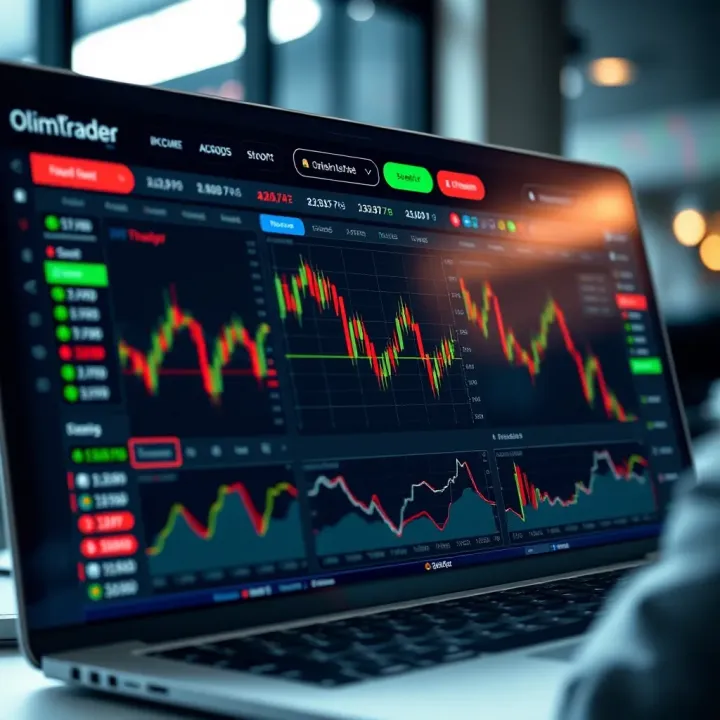
📊 Conheça a OlimpTrader: análise completa da plataforma, ativos, contas, estratégias, segurança e riscos para decidir seu investimento com confiança.
📊 Descubra as melhores configurações do MACD para day trading. Aprenda a ajustar o indicador, evitar sinais falsos e melhorar suas operações intradiárias!
🔍 Explore a plataforma Quoex: conheça vantagens, desvantagens, tipos de ativos e métodos de depósito e retirada para operar seguro e informado!
Baseado em 8 avaliações