
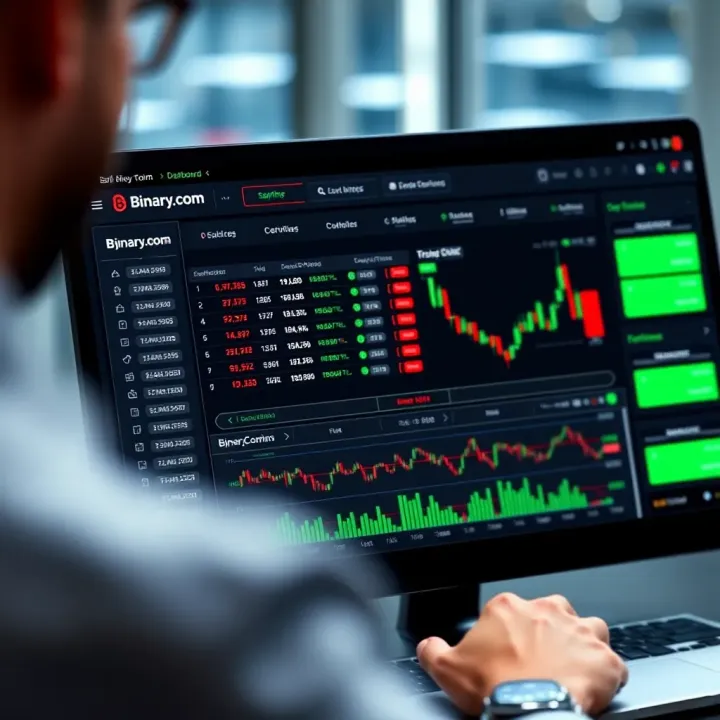
Análise da Plataforma Binary.com: Guia Completo para Investidores
🧐 Análise detalhada da Binary.com: descubra tipos de contratos, segurança e dicas essenciais para investir com confiança e evitar riscos.
Editado por
Fernanda Lima
Binary options offer a straightforward way to speculate on the direction of financial assets like stocks, currencies, or commodities. Unlike traditional trading, you don't buy the asset itself—instead, you predict whether its price will go up or down within a specified timeframe.
At its core, a binary option is an all-or-nothing bet: if your prediction is correct, you get a fixed payout, often around 70% to 90% of your investment. If you're wrong, you lose the amount you put in. For example, if you bet $100 that Apple's stock price will rise in the next hour and it does, you might earn $170 total ($100 initial plus $70 profit). But if it drops or stays flat, you lose that $100.

This clear-cut payoff makes binary options easy to understand, but it also means the risks are immediate and total.
Binary options are typically short-term, sometimes expiring within minutes or hours. This appeals to traders who want quick results, but it also demands sharp timing and accurate market predictions. Traders use charts, market news, and technical indicators to increase their chances.
Limited payout vs. limited loss: You know upfront how much you stand to win or lose.
Expiration times vary: Choose periods ranging from 60 seconds to several hours or days.
Underlying assets: These include indices like the S&P 500, forex pairs such as EUR/USD, stocks like Tesla, and commodities including gold.
For professionals like traders and analysts, binary options serve as a tool for hedging or quick speculation. Still, the simplicity hides pitfalls—prices can be volatile, and many platforms don’t offer the same transparency as regulated exchanges.
Before jumping in, understand the platform’s credibility and the legal environment. Some brokers operate legally under bodies like the SEC or CFTC, while others might not, which impacts your protection and fund safety.
Bottom line: binary options are attractive for their simplicity but demand caution. Knowing the mechanics and risks helps you make informed choices without getting blindsided.
Understanding what binary options are is fundamental for anyone looking to explore this investment option. Binary options offer a straightforward way to trade on the price movement of various financial assets without owning the assets themselves. This simplicity attracts many traders who want quicker decisions and clear outcomes.
Binary options operate on a simple "all-or-nothing" payoff principle. This means, when you place a trade, you either receive a fixed payout if your prediction about the asset's price movement is correct, or you lose your initial investment if it's wrong. For instance, if you predict that Apple’s stock price will be above $150 at expiration and it is, you get a set payout, often around 70-90% of your stake. If it’s below $150, you lose what you wagered. This clear-cut structure makes it easier to manage risk compared to traditional trading, where losses and gains can vary widely.
Binary options can be based on a variety of underlying assets. Typical examples include stocks like Tesla or Amazon, commodity prices such as gold or crude oil, currencies like USD/EUR pairs, and major stock indices like the S&P 500. This flexibility allows traders to focus on markets they know well or diversify their trades to reduce risk. The availability of different asset types also means you can take advantage of movements in global markets at different times.
Trades in binary options are placed via ‘call’ or ‘put’ options. A call option means you expect the asset’s price will go up, while a put option bets on a price drop. For example, if you believe the price of crude oil will rise over the next hour, you would buy a call option. Each trade requires you to pick an asset, choose the direction (call or put), and decide how much you want to stake.
Every binary option has an expiration time, which can range from 30 seconds to several hours or days. The expiration is when the final outcome is determined. If the price prediction holds true at expiration, you receive your payout. If not, you lose your investment. This fixed timeframe means timing your entry and exit is critical. Traders can choose shorter or longer expiration to match their market analysis or trading style.
Imagine you buy a put option on Tesla, betting the stock will be below $700 in 15 minutes. If at expiration it’s at $695, you win a fixed payout, say 80% of your $100 stake, earning $180 total. If the price is $705, you lose your $100. Another scenario could be a call option on the EUR/USD currency pair, expecting it to rise above 1.1000 in one hour. These examples show how binary options hinge on straightforward yes/no questions about price movements within set times.
The bottom line is, binary options provide a simple, fixed-risk way to engage with financial markets, but they demand precise timing and clear predictions to succeed.
Trading binary options offers a clear-cut way to potentially earn profits, but it also carries significant risks. Understanding these pros and cons helps you decide if this type of trading suits your style and risk tolerance. Unlike traditional investing, binary options feature predetermined payouts and losses, which can appeal for their simplicity—but that straightforwardness masks some hazards.
Fixed returns vs. risk exposure: One key element of binary options is that they offer fixed returns if a trade ends "in the money." For example, you might invest $100 predicting the price of Apple stock will go up. If you’re right, you could earn a fixed return, like $80 profit, no matter how much the stock actually rises. However, if you’re wrong, you lose your entire $100 investment. This setup means you know your potential gain or loss upfront, which many find attractive for managing risk. Yet, the chance to win big on a single trade is limited compared to traditional stock trading, where gains can scale.
The role of market volatility: Market ups and downs directly affect binary options, especially short-term ones. High volatility in assets like oil prices or tech stocks can cause prices to swing dramatically. This volatility increases the chance of price hitting your predicted target but also the risk it moves against you just as quickly. For example, a sudden news event can flip sentiment in minutes, making a previously safe call option turn worthless. Traders must stay alert to market conditions because volatility can either amplify profits or wipe out investments fast.
High risk of losing entire investment: The most obvious risk is losing your full investment on a single trade. Each binary option either pays a fixed sum or nothing, so if the trade doesn't hit your prediction exactly, you get zero return. This "all-or-nothing" nature means consistent profitability requires accurate prediction and discipline. Many new traders underestimate how often they could lose, leading to a quick wipeout of their capital if they chase losses or ignore risk controls.
Broker reliability and fraud risks: Unfortunately, the binary options space has seen issues with unscrupulous brokers. Some operate without proper licenses or manipulate trading platforms to skew results. This risk makes it crucial to choose brokers registered with regulators like the Commodity Futures Trading Commission (CFTC) or the Securities and Exchange Commission (SEC). Do your due diligence by checking broker reviews, regulatory status, and customer feedback before committing funds. Using well-known platforms reduces the chance of fraud considerably.
Bottom line: While binary options can simplify trading decisions and cap potential losses, the fixed payout structure hides high risks of total loss. Staying aware of volatility effects and carefully selecting trustworthy brokers are critical steps for anyone considering binary options trading.
In binary options trading, having a solid strategy isn’t just helpful—it’s essential. Traders who rely on proven methods can better navigate the short-term nature of these trades, making decisions based on concrete analysis rather than guesswork. Let's look at two key categories: technical analysis techniques and money management.
Using charts and indicators is a cornerstone of smart binary options trading. These tools let you track price movements and spot potential trade opportunities early. For example, popular indicators like the Relative Strength Index (RSI) can show whether an asset is overbought or oversold, helping you decide if a price is likely to reverse or continue its trend. Candlestick charts, which show price patterns during set time frames, can reveal signals like "bullish engulfing" or "hammer" patterns that traders often watch for entry points.
Technical analysis gives you an edge by turning raw market data into actionable signals. It’s especially useful in binary options because of the fixed expiration times—you want to pick trades based on near-term market activity rather than long-term fundamentals.
Trend following and reversal patterns form another important part of technical strategy. Following a trend means trading in the direction the market is moving, like buying when prices are steadily rising. Conversely, reversal patterns signal a likely change in direction. For instance, if a stock price has been climbing but forms a “double top” pattern, it suggests the rise might be ending and a drop could follow. Recognizing such patterns can help traders pick calls or puts confidently.
Both these techniques require practice and a keen eye, but combined they provide a structured way to decide when to enter or exit a trade, boosting your chances of consistent profits.
Setting limits on trade size is critical to protect your capital. Because binary options can wipe out your entire stake on a single losing trade, risking too much at once is dangerous. A good rule of thumb is to risk only a small percentage of your total trading budget per trade—often 1 to 5 percent. This approach helps you stay in the game longer and avoid big losses.
For example, if you have $1,000 to trade with, setting a max bet of $20 per trade keeps risks manageable and smooths out volatility. It’s tempting to go big after a loss, but disciplined limits prevent emotional decisions that can drain your account quickly.
Diversification of trades means not putting all your money behind one asset or market condition. With binary options, this could mean spreading trades across different stocks, currencies, or commodities. It also involves varying expiry times and using different technical signals.
Diversification helps balance risk because one market’s drop might be offset by gains elsewhere. If all your trades rely on the same indicator or asset, you’re more vulnerable to a sudden market shock wiping out your entire stake.
Bottom line: Combining technical analysis with solid money management makes trading binary options less like gambling and more like calculated investing. Keep your trades small, spread your risks, and keep an eye on charts—the right strategy can make all the difference.
Understanding the legal framework around binary options trading is vital for any investor or trader. Legal regulations protect traders from fraud and ensure brokers operate fairly. Without clear rules, the market risks being flooded with unreliable operators, putting your investment in jeopardy.
The Commodity Futures Trading Commission (CFTC) oversees binary options trading in the U.S., imposing strict rules to protect investors. For example, the CFTC prohibits off-exchange binary options trading unless the platform is registered and compliant. This means that many popular international binary options platforms are illegal for U.S. residents to use. Brokers offering these services without proper registration can face hefty fines and sanctions.
Retail traders feel the impact of these restrictions directly. Because of the tight controls, U.S.-based traders have fewer options and must choose regulated brokers familiar with CFTC requirements. If you’re a trader here, using an unregulated platform might seem tempting for better payouts, but it exposes you to a high risk of scams with little legal recourse.
Across the globe, regulations vary widely. Some countries have well-established financial authorities that license binary options brokers, while others have little oversight. Regulated brokers typically have to meet strict standards on transparency, fund security, and dispute resolution. On the flip side, unregulated brokers might offer flashy bonuses or high returns but often lack consumer protections.
Verifying a broker's legitimacy is a crucial step before you even think of investing. You can check if a broker has a license from recognized authorities like the U.K.'s Financial Conduct Authority (FCA) or Australia's ASIC. Always ask for proof of licensing and read reviews from trusted sources. If the broker makes claims that sound too good to be true or has no clear regulatory information, walk away. This simple check can save you from falling prey to fraud.
Knowing the legal landscape helps you make smarter choices, protecting your money and peace of mind when trading binary options.
In summary, stick to brokers compliant with U.S. regulations if you're trading stateside. If you trade internationally, focus on licensed brokers regulated by reputable agencies. This approach minimizes your risk and ensures a safer trading experience.
When launching into binary options trading, practical tips can be your best compass. They help cut through the noise, keeping your efforts focused on what's essential—choosing the right broker, setting achievable goals, and consistently learning. Without a solid starting point, even the sharpest investor can struggle to find their footing.
Picking a broker isn’t just about flashy ads or flashy platforms; it's about trust and transparency. Look for brokers regulated by recognized US authorities like the CFTC and NFA—this drastically reduces the risk of fraud. A user-friendly platform that offers clear trade execution and a range of assets can make a big difference. For example, brokers offering real-time quotes and one-click trading streamline the experience. Customer support availability isn't a bonus—it’s a necessity, especially when timing trades is critical.
Unfortunately, the binary options space has had its share of scams, so staying vigilant is key. Avoid brokers promising guaranteed returns or pressuring you to deposit large sums quickly. A red flag is when withdrawal processes are complicated or delayed without reasonable explanation. Always verify if the broker provides transparent terms and conditions, including clear fee structures. For instance, some shady operators might hide withdrawal fees or penalize users for closing trades early. Doing a quick background check on the broker, especially through reviews and regulatory websites, can save your investment from vanishing.
Jumping in with sky-high expectations is a quick route to frustration. Set clear, achievable goals based on your risk tolerance and market knowledge. For example, aiming to earn a steady 5% return monthly is usually safer than chasing 50% overnight. Your plan should include specific limits on how much capital you’re willing to risk per trade and daily loss limits. This keeps emotions in check and prevents impulsive decisions.
Staying sharp involves more than just jumping from trade to trade. Use demo accounts rigorously before you put real money on the line. These practice platforms mimic live trading without the risk, letting you test strategies and get comfortable with timing. Plus, the markets shift—so committing to ongoing education through webinars, market analysis, and financial news keeps you prepared. For example, if you notice a new technical indicator gaining attention in forums or at seminars, try it out in your demo first before trusting it in real trades.
Bottom line, starting with the right broker and a solid plan isn’t just smart—it’s essential. Taking time upfront to build knowledge and trust protects your money and makes trading binary options a clearer, more controlled experience.
🧐 Análise detalhada da Binary.com: descubra tipos de contratos, segurança e dicas essenciais para investir com confiança e evitar riscos.

📊 Descubra como operar na corretora Binary com dicas, riscos e ofertas. Entenda a plataforma para tomar decisões seguras em opções binárias. 🚀

📊 Descubra como a Binary Corretora funciona, seus produtos, segurança e riscos. Avalie se vale a pena investir nessa plataforma de opções binárias!

🔍 Global InterGold: análise detalhada sobre confiabilidade, modelo de negócio e riscos. Saiba se é segura para comprar ou investir no mercado de ouro! 💰
Baseado em 9 avaliações